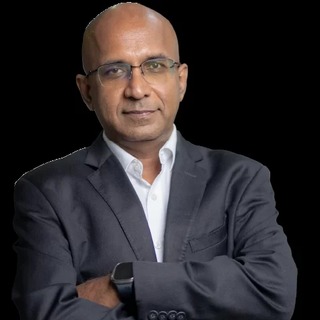
Home / Founders / Shub Bhowmick
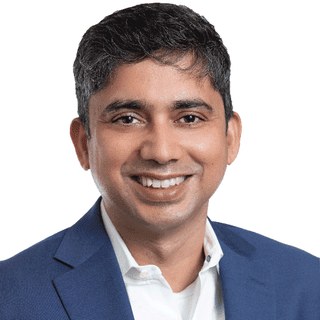
Bhowmick started Tredence in a Bangalore flat to close the gap between analytics insight and business results, and he is now pushing the firm toward pricing tied to outcomes as AI changes how services are sold.
Shub Bhowmick is co-founder and chief executive of Tredence, a data science and AI services firm headquartered in San Jose, California, with most of its staff in India. He founded the company in 2013 around what it calls the last-mile problem in analytics, the gap between producing an insight and getting business value from it.
Studying Chemical Engineering in Varanasi, India
Bhowmick earned a bachelor's degree in chemical engineering at IIT (BHU) in Varanasi, India, and began his career in manufacturing before moving into technology as a project leader at Infosys, he told Pulse 2.0. He then took an MBA at Northwestern University's Kellogg School of Management to learn more about entrepreneurship and worked as a consultant at firms including American Express, Mu Sigma, Diamond Consultants and Liberty Advisor Group, according to a Tredence interview.
Starting Tredence in a Bangalore Flat
He founded Tredence with Sumit Mehra and Shashank Dubey, working out of a three-bedroom flat in Bangalore, India, and selling their last-mile approach to large retailers, consumer goods makers and manufacturers. Soon after the company landed its first client, a payment came in late. "We had to decide whether to hide the truth from our employees or be transparent about our situation," Bhowmick told Pulse 2.0. The founders told the team, kept its loyalty and gave raises once the money arrived.
Growing Tredence Past 5,000 Employees
In 2026 Bhowmick told The Hindu BusinessLine that Tredence's revenue had grown from about $30 million in 2020 to an expected $340 million to $350 million in 2026, with about 5,000 employees, and that he aims to reach $1 billion in annual revenue by 2030. He said about half of its revenue still comes from data engineering work and half from AI services, and that acquisitions will be about adding capabilities in new industries or regions.
He also wants to stop billing clients by the hour. "Today, about one-third of my business is still time and money. I want to make it zero over time," he said, describing a shift toward contracts priced on results.
Links
- Tredence
- Tredence leadership page
- Pulse 2.0 interview
- The Hindu BusinessLine interview
- Authority Magazine interview