
Home / Founders / Directory / Rafael Garcia
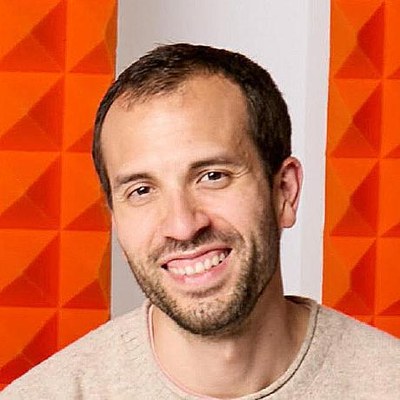
Rafael Garcia
Co-founder and CTO · Kernel
Browser infrastructure Cincinnati
Garcia is building the low-level systems that let Kernel start cloud browsers for AI agents in milliseconds and keep them parked cheaply for days.
Rafael (Raf) Garcia is co-founder and chief technology officer of Kernel, a company that runs cloud browsers for AI agents and automated tests. He started it in 2025 with Catherine Jue, Kernel’s chief executive, and works from Cincinnati, Ohio, one of the company’s two headquarters along with San Francisco, California. Before Kernel he was co-founder and chief technology officer of Clever, the education software company that gives students one login for their classroom apps.
Clever and the classroom login
Garcia studied applied math at Harvard, graduating in 2009, and was working in finance in 2012 when he and classmates Tyler Bosmeny and Dan Carroll started Clever. Carroll was then data and technology director for a school district in Denver, Colorado, and Clever began as a fix for that district’s IT problems. Its Instant Login feature gave each student one username and password for every approved app. “As a teacher, if you are teaching a lesson in a computer lab, the last thing you want to do is spend class time creating accounts for students or trying to debug login issues,” Garcia said in a 2016 Harvard alumni profile. Clever was sold in 2021 for $500 million, according to Kernel’s Y Combinator launch post.
As chief technology officer he also chose Clever’s tools. “This is where I get to talk about embarrassing initial technology choices. The first stuff we did was in CoffeeScript and Node,” he said on the Go Time podcast. Clever began moving to the Go language in March 2014, starting with Sphinx, an open-source rate limiter that kept each company using Clever’s API within its request limits.
Chromium on bare metal
At Clever, part of his job was managing the company’s Amazon Web Services bill. “If there were some escape from the death grip that AWS had on us, I’d jump on that,” he wrote on Kernel’s blog. Kernel’s main workload is Chromium, the open-source browser behind Chrome, so he looked for ways to run thousands of browsers on bare-metal servers. A warm pool of Docker containers cost too much, because many customers needed a browser to stay open for days. He moved Chromium onto Unikraft unikernels, which start in milliseconds and can save a running browser’s memory to disk, and later onto a QEMU-based system the team open-sourced as Hypeman, which added GPU-accelerated browsers.
Building from Cincinnati
Kernel splits its team between two cities. In a StartMidwest interview that Garcia gave with founding engineer Mason Williams, Kernel said most of its engineers work in Cincinnati, away from “the constant context-switching that comes from being in the epicenter of the hype cycle,” while customer-facing staff work in San Francisco, close to most customers.
In the same interview Kernel named agent identity as a next problem: letting an AI agent sign in to a service on a person’s behalf, with explicit consent and limited permissions, so it can book, submit, or manage an account instead of only reading pages.