
Home / Founders / Maxim Fateev
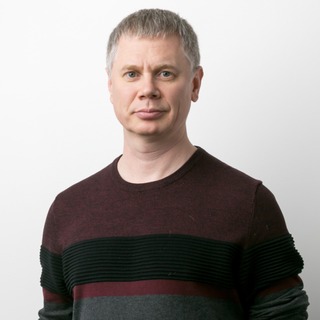
Maxim Fateev
Co-founder and CEO
Temporal
Maxim Fateev is co-founder and CEO of Temporal, the durable-execution platform that keeps long-running business logic alive across crashes, retries, and machine failures. He spent decades on messaging and workflow systems at Amazon, Microsoft, Google, and Uber before spinning Cadence into Temporal so the same guarantees could live outside one company's walls.
Amazon queues into AWS Simple Workflow
At Amazon he spent years on pub/sub and became design lead for AWS Simple Workflow after watching teams drown in queues. Event-driven systems, he told Software Engineering Daily, are "awesome at runtime" but "events and queues are just wrong abstraction when you think about your systems" — business logic scatters, compensations get hard, and you cannot see the full control flow. Co-founder Samar Abbas carried related ideas to Microsoft's durable task work, then they reunited at Uber.
Cadence at Uber, Temporal the company
At Uber they built Cadence in the open; within three years more than a hundred internal use cases ran on it, while early external adopters included Airbnb, HashiCorp, and Coinbase. Staying inside Uber could not fund the external community, so they forked into Temporal under an MIT license and started the company. Fateev insists the value is not only scale: "Temporal helps you to write your code faster, because it eliminates 90% of code-related reliability," even for a two-person startup that cannot drop customer work on the floor.
What durable execution means
On SED he defined the core idea: a runtime that preserves full execution state — local variables, stack, blocked API calls — so if a process crashes, Temporal recovers on another machine and you stay blocked on the same call until it returns, even a day later. "When you write your code, you don't even think about storing state," he said. SDKs stay idiomatic to each language so developers write ordinary Go, Java, or TypeScript rather than a foreign workflow DSL.
On open source and cloud
Go-to-market stays open-source-first: companies adopt MIT Temporal, then often move to Temporal Cloud when operating the cluster becomes its own team. He will not split commercial and OSS feature sets so they diverge. The category name he pushes is durable execution — still not ubiquitous, but sticky once learned. The through-line is making resilient distributed systems feel like writing normal code.
Index score breakdown
Overall 76 · Rank 10 on the AI Founders to Watch Index
| Factor | Score |
|---|---|
| Innovation | 9 |
| Impact | 8 |
| Company success | 7 |
| Vision clarity | 9 |
| Credibility | 10 |
| Momentum | 6 |
| Independence of signal | 2 |