
Home / Founders / Directory / Matan Grinberg
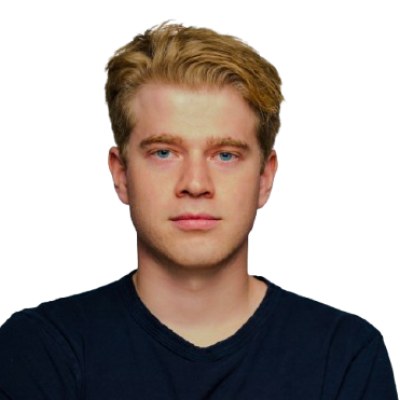
Matan Grinberg
Co-founder and CEO · Factory
Coding agents Enterprise software
Grinberg left a string theory PhD to build Droids, coding agents aimed at the migrations and old codebases enterprise engineers dread.
Matan Grinberg is co-founder and CEO of Factory, a San Francisco, California, company that builds autonomous coding agents it calls Droids. A theoretical physicist by training, he studied string theory at Princeton and UC Berkeley before leaving his PhD in 2023 to start the company with Eno Reyes, now its chief technology officer.
A decade in string theory
In a McKinsey interview he describes spending about ten years as a theoretical physicist, working on quantum field theory, general relativity, and string theory. During his PhD at Berkeley he started taking AI courses and became fixated on program synthesis, the research area now usually called code generation. “After ten years in physics, I wanted to work on something fundamental. And software is foundational to everything in AI,” he told Forward Future.
Leaving Berkeley to start Factory
After about a year and a half on the problem, he decided a company was a better way to pursue it than academia. He cold-emailed a former physicist then working at Sequoia Capital, and after a long walk together that investor pushed him to make the jump. He left the PhD program soon after, and Factory started in April 2023.
Droids for legacy code
Factory’s Droids take on software work such as code review, testing, refactoring, documentation, and migrations. Grinberg says the company has focused on “legacy migrations and code bases that are sometimes older than the people working on them.” In 2025 Factory released a Droid command-line tool that works with models from several labs, so teams can run the agents from a terminal without tying themselves to one model provider.
On agent-native development
Grinberg calls Factory’s approach agent-native software development. He has compared code editors to the Henry Ford line about customers asking for faster horses, saying editors “weren’t designed for a world where developers write 0% of their code.” On a Sequoia Capital podcast he explained that the company name came partly from Tesla’s plants, where robotic arms do the assembly, and from the idea of a dark factory where software keeps getting built with the lights off.